The Land
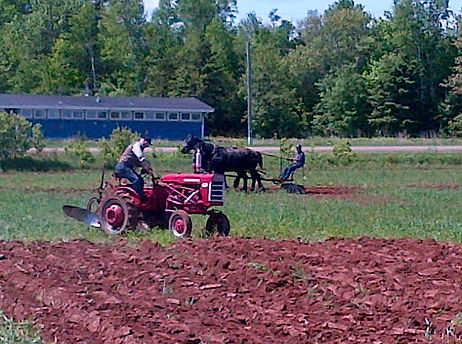
Frankie MacAulay was the last of untold generations to work on the land. His Irish and Highland ancestors had depended on small holdings to sustain their families and, eventually, to sell produce and livestock to market. Before modern legal systems existed, landholding was communal. As Ireland and Scotland adopted English customs, Irish farmers either owned property themselves or rented from a landlord. In the Highlands, land was controlled by clan chiefs with clan members providing rent and/or service in return for its use.
The Irish outgrew their land holdings, and the Highlanders' clan system collapsed. Both faced persecution and restrictions based on their cultural and religious affiliations. Farmers looked to North America as an opportunity to survive and perhaps even prosper. Because the continent's Indigenous people did not have institutions and systems like those found in Europe, their territory was declared "Terre Nullis" (Empty Land), thereby sanctioning the takeover of their land.
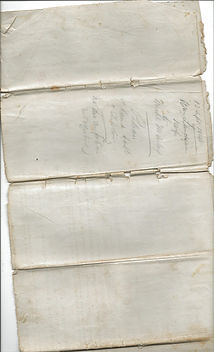
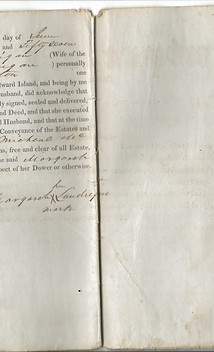
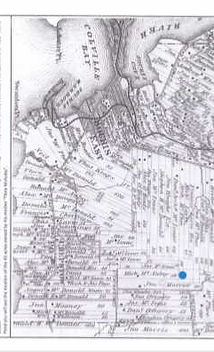
After struggles with landholding restrictions and absentee landlords, settler descendants like Michael MacAulay purchased farms on the Island. He bought land in St. Catherine's free and clear. Debt was not entered into lightly at the time, and working people were not likely to get credit anyway. That was reserved for upper classes.
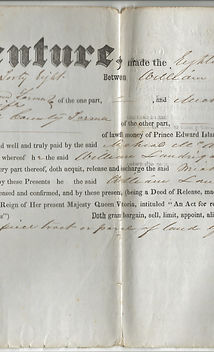
Land Purchase 1848
Part 1
Land Purchase 1848
Part 4
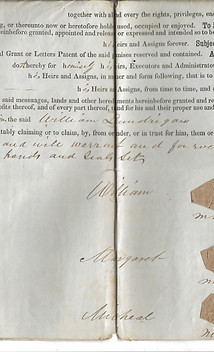
Land Purchase 1848
Part 2
Land Purchase 1848
Part 5
Land Purchase 1848
Part 3
Map
St. Catherine's Farm
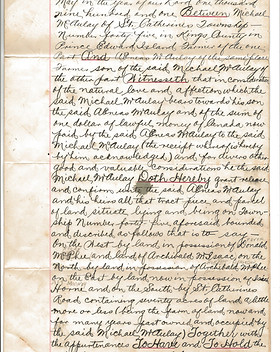
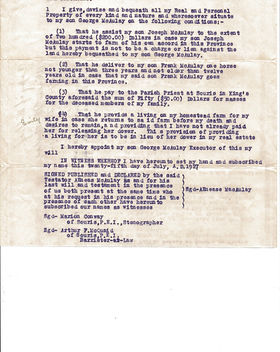
When Michael MacAulay was in his eighties, he passed the farm along to his son, Aeneas. That transaction is documented here. Aeneas, in turn, willed the farm to his oldest son, George, with some added considerations for his other sons in case they wanted to get into farming themselves.
Land Transfer 1901
Part 1
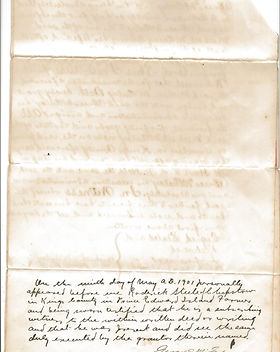
Land Transfer 1901
Part 3
Aeneas MacAulay Will
Part 1

Land Transfer 1901
Part 2

Land Transfer 1901
Part 4

Aeneas MacAulay Will
Part 2
In the will, you will see reference to the possibility of Emily MacAulay returning to the farm. Aeneas MacAulay had a second marriage to a woman named Emily Walsh. George MacAulay described her as a "woman from town (Charlottetown) who came out to St. Catherines on the train to play cards with the Mooneys." Presumably, Aeneas and Emily became acquainted across the card table. They married, and George said that she "set up camp in the living room and didn't seem interested in doing much work." This arrangement did not last long, and Emily left farm life behind her.
Divorce would have been out of the question, so she would be considered a widow when Aeneas died. That is why he would have referenced her "dower" in his will. As his widow, Emily would be entitled to a share in the estate while she lived.
Aeneas was only in his fifties when he died in May, 1929. George took over the farm and married Esta Power that September. Their honeymoon did not last long. In November, while the world reeled from the stock market crash that had occurred a month earlier, Emily made a claim against the estate. Esta reported that she also made a visit to the farm where she took various items from the house, including the oil cloth from the kitchen floor. The case was not concluded until June, 1931 when the farm was mortgaged to provide Emily with a cash settlement.
Even many years later, George and Esta could not speak about this experience without their voices cracking. They were deeply distressed by the process and the debt incurred, afraid that they would end up losing the farm before the loan was repaid.

McQuaid & Mullally Letter
November 1929
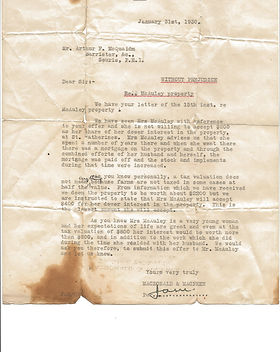
MacDonald & MacPhee Letter
January 1930
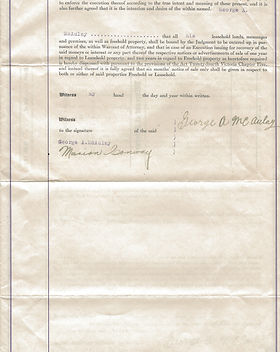
Mortgage 1931
Part 2
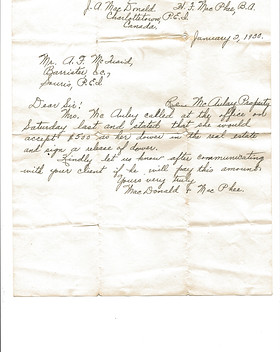
MacDonald & MacPhee Letter
January 2, 1930

Mortgage 1931
Part 1
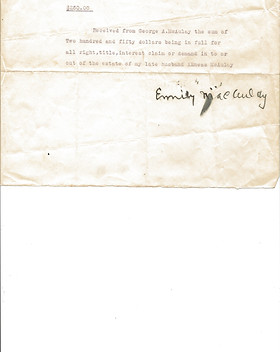
Receipt
June 1931